
Painting costs vary widely based on the size of your home, the condition of the surfaces, and what type of work is involved—exterior, interior, or both. Understanding what drives the price helps you compare bids fairly and avoid surprises when estimates land in your inbox.
The biggest factors that affect painting cost
No two homes paint the same way. Before a painter can give you a number, they need to look at several things that push the price up or down.
Square footage and surface area
Bigger homes take more paint, more labor, and more time. For exteriors, the number that matters is the paintable surface area—walls, trim, fascia, and doors—not just the floor plan. A two-story home has far more wall surface than a single-story home with the same square footage, so it costs more to paint even if the footprint looks similar on paper.
Surface condition and prep work
Prep is where most of the real work happens, and it is also where costs vary the most. A house with peeling paint, dry rot, wide cracks in the stucco, or old caulk that has pulled away from the trim needs more labor before a brush ever touches the wall. Skipping prep to lower the price is the main reason paint jobs fail early. Any honest estimate will spell out exactly what prep is included.
Stucco versus wood siding
Stucco homes are common across Sacramento, Citrus Heights, and Roseville. Stucco takes more paint than smooth siding because the textured surface absorbs it, and a quality job calls for spraying and then back-rolling a second coat so the finish lasts. Wood siding requires careful attention to any dry rot, and board-and-batten or lap siding has more linear feet of edge to caulk and cut in.
Number of colors
A single body color with white trim is straightforward. Add a third or fourth color—a contrasting front door, shutters in a different shade, or an accent on the porch ceiling—and the painter spends more time masking and cutting clean lines. It is usually worth it for the look, but it does add to labor time.
Accessibility and height
Single-story homes are faster to paint than two-story homes because staging and ladder work take time. Very high peaks, tight side yards, or steep roof lines add to the setup. Interiors with vaulted ceilings or tall stairwells work the same way—high ceilings take longer and sometimes require specialty equipment.
Number of coats and paint quality
The brand and product line of paint affects the material cost, and the number of coats affects both material and labor. Bare wood and new drywall need a primer coat before finish coats. Dramatic color changes—say, going from a dark brown to a soft white—may need an extra finish coat to cover evenly. A good estimate will tell you exactly what is planned.
Exterior painting: what drives the cost
A full exterior repaint typically includes pressure washing, scraping and sanding loose paint, caulking gaps, priming bare spots, and applying finish coats to the body, trim, fascia, and doors. The variables below are what separate a lower bid from a higher one.
| Variable | Pushes cost lower | Pushes cost higher |
|---|---|---|
| Home size | Small single-story | Large two-story |
| Surface condition | Recently painted, good shape | Peeling, cracking, dry rot present |
| Siding type | Smooth stucco or fiber cement | Rough stucco, wood, board-and-batten |
| Colors | One body color, one trim color | Three or more colors, complex trim |
| Accessibility | Open yard, easy access | Tight lot, tall peaks, steep slope |
| Dry rot repair | None needed | Multiple boards or trim sections replaced |
Interior painting: what drives the cost
Interior jobs range from a single accent wall to a whole-home repaint covering every room, hallway, ceiling, and door. The variables are similar but the specifics are different.
- Number of rooms: More rooms mean more labor and more material, but painting several rooms at once is usually more efficient per room than doing them one at a time on separate visits.
- Ceiling height: Standard eight-foot ceilings are straightforward. Vaulted ceilings, two-story entryways, and tall stairwells add setup time and sometimes require lifts or specialty ladders.
- Trim, doors, and baseboards: Cutting clean lines on trim takes time. A room with heavy crown molding, wide baseboards, and multiple doors costs more to paint than a plain box room.
- Wall condition: Holes, cracks, texture repairs, and skim coating add to prep time. The smoother and cleaner the walls, the faster the job moves.
- Color change: Going from a dark wall to a light one—or the reverse—often needs extra coats for even coverage.
- Furniture and protection: Moving furniture out of a room before the painter arrives can save time. Most painters will work around furniture, but it adds steps.
What about cabinet refinishing?
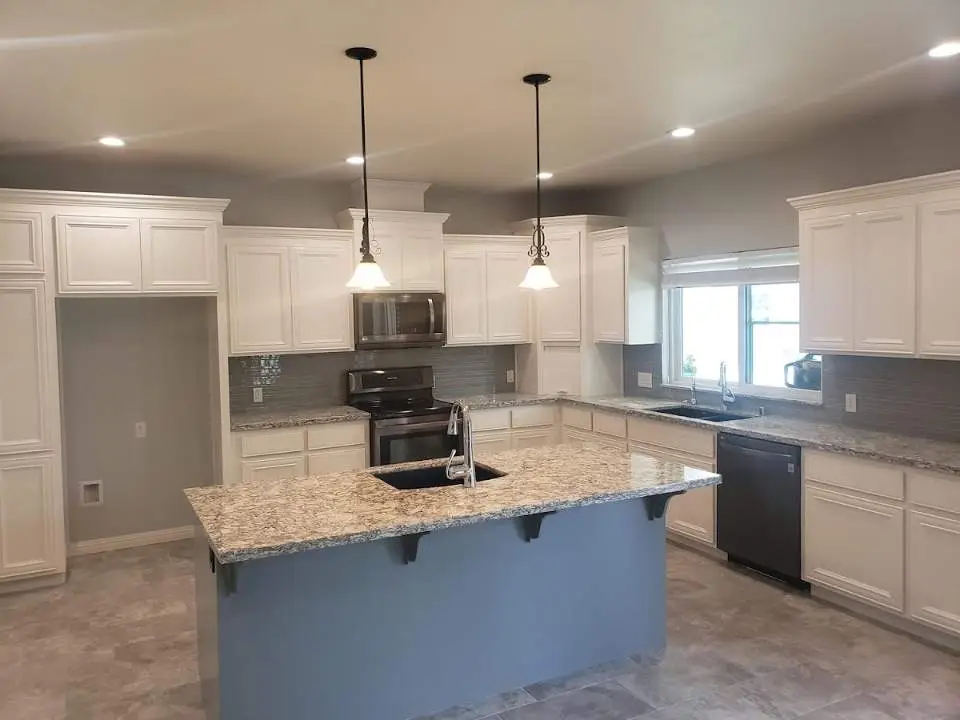
Cabinet refinishing is its own category. The cost depends on the number of cabinet doors and drawer fronts, whether the boxes are being painted too, and how much degreasing and sanding the existing finish needs. Two-tone jobs—white uppers with a darker island, for example—add masking time. Because cabinets are handled and cleaned daily, the prep (cleaning, degreasing, bonding primer, and a smooth finish coat) matters more here than almost anywhere else in the house.
What a written estimate should include
Before you agree to any painting job, ask for a written estimate that spells out exactly what is covered. A vague price with no detail is hard to compare against other bids. Look for:
- Surfaces to be painted (body, trim, doors, ceilings, etc.)
- Prep steps included (washing, scraping, caulking, priming)
- Number of finish coats
- Any dry rot or repair work included, and what is excluded
- Paint brand and product line
- How the work area will be protected
When you compare bids at different price points, the detail in the estimate usually explains the difference. A lower number that skips the prep steps is not the same job as one that spells out every surface.
When to call a professional painter
DIY painting is possible for a single interior room with flat walls and standard ceiling height. As soon as the job gets larger—whole-home interiors, any exterior, cabinet refinishing, dry rot repair, or high surfaces—the time, equipment, and skill required make a professional the better call.
If you are in Citrus Heights, Roseville, Folsom, Sacramento, or the surrounding area and want a clear price before you decide anything, The Painter offers free estimates with a written scope of work. Brian comes out himself, looks at the surfaces, and gives you a straight answer on what the job involves. The Painter is licensed and insured—CSLB #1001415. Call or text (916) 743-1743 to set one up.
Frequently asked questions
What is the biggest factor in house painting cost?
Surface condition and the amount of prep work required have the biggest impact on cost. A home with peeling paint, dry rot, or cracked stucco takes significantly more labor before painting even begins, which is reflected in the estimate.
Does a two-story home cost more to paint than a single-story home?
Yes. Two-story homes have more paintable surface area and require more time to stage and work safely at height. That added labor and setup is reflected in the price.
Is cabinet refinishing included in a standard interior paint estimate?
Not usually. Cabinet refinishing is a separate process with different prep steps, materials, and time requirements, so it is typically quoted on its own.
How do I know if a low bid is too low?
Ask what prep steps are included. A bid that skips washing, caulking, or priming may look cheaper upfront but often results in paint that fails sooner. A detailed written estimate makes bids easier to compare accurately.
Do I need to get multiple bids for a painting job?
Getting two or three bids is a reasonable way to understand the market and compare what each painter includes. Make sure you are comparing written estimates that list the same surfaces and prep steps, not just the final number.